
NM Voters First believes Ranked Choice Voting (RCV), is the ideal voting system for New Mexico and its municipalities.

How it works
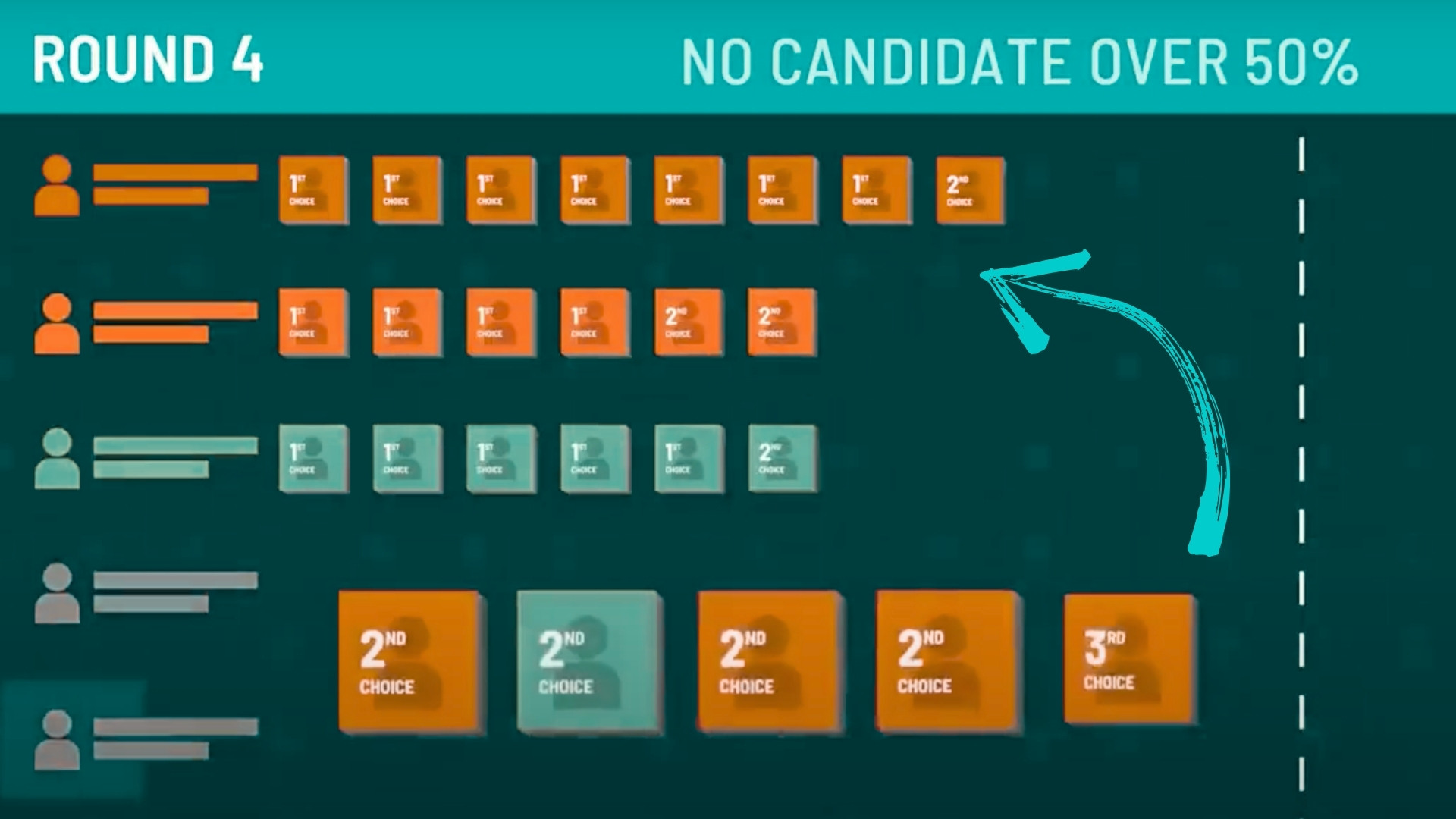
With RCV, also known as instant-runoff voting, voters rank candidates in order of personal preference, from favorite (1st choice) to least favorite. On Election Night, 1st choice votes are counted to determine who voters like the most. If a candidate receives a majority (50% + 1 vote) of votes, they win. If no candidate receives a majority in the first round, the candidate with the fewest 1st choice votes is eliminated, but their 2nd, 3rd, and so on votes are redistributed in rounds. If your favorite candidate is eliminated, your vote is instantly counted for your next choice. This calculation repeats itself until one candidate reaches a majority and wins.
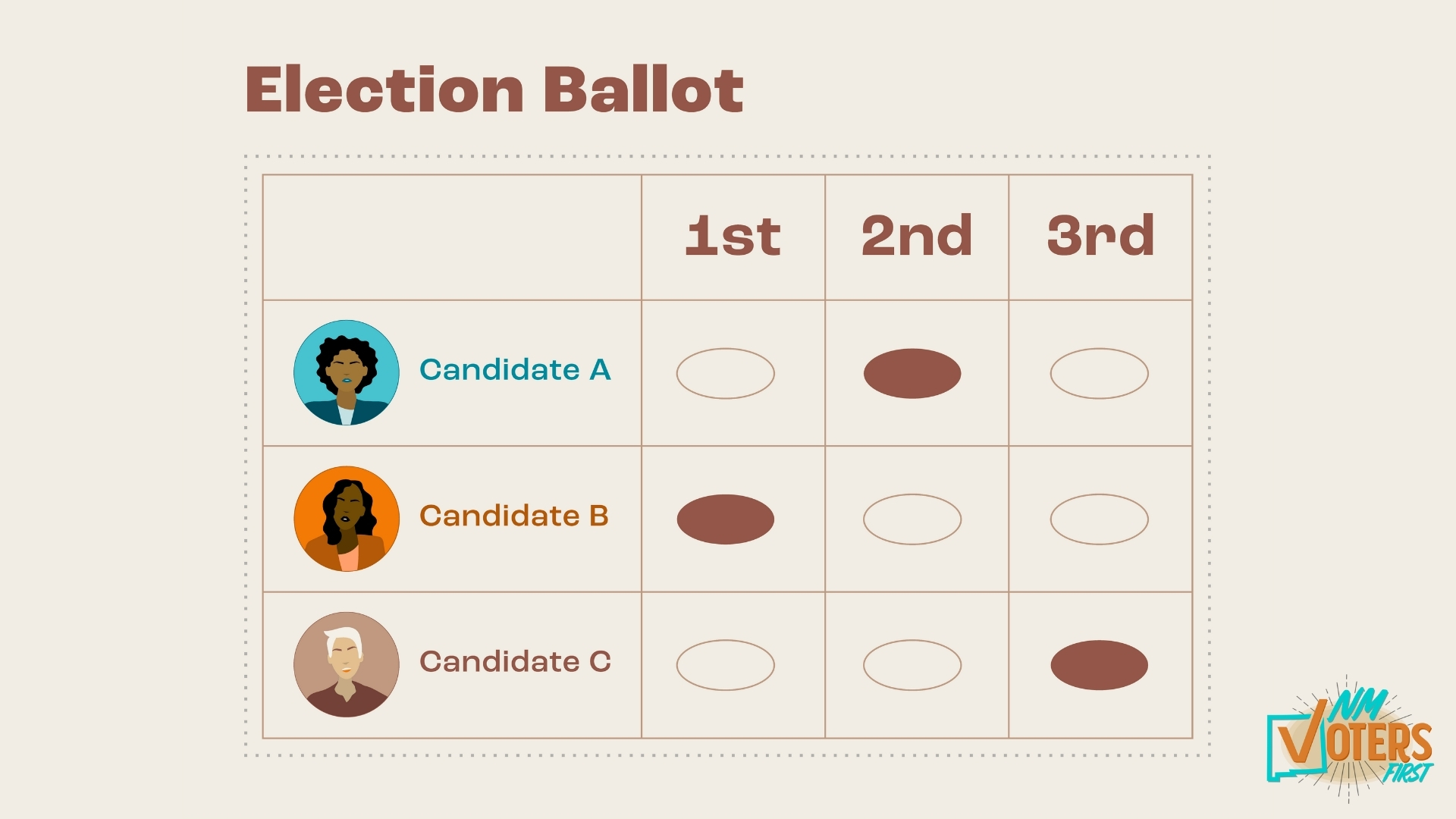
RCV elections ensure that your vote for your favorite candidate always counts, even if they don’t have a high chance of winning. If your 1st choice candidate gets eliminated, then your vote immediately counts for your next choice. You can truly vote your conscience without worrying about wasting your vote. Ranking your 2nd, 3rd, and 4th choices will never hurt your favorite candidate. It simply amplifies your voice in the process. You also don't have to rank other candidates if you don't want to. If there are 5 candidates and you only truly like 3 of them, you can merely rank those 3 in order of your preference and leave the bubbles for the other candidates empty.
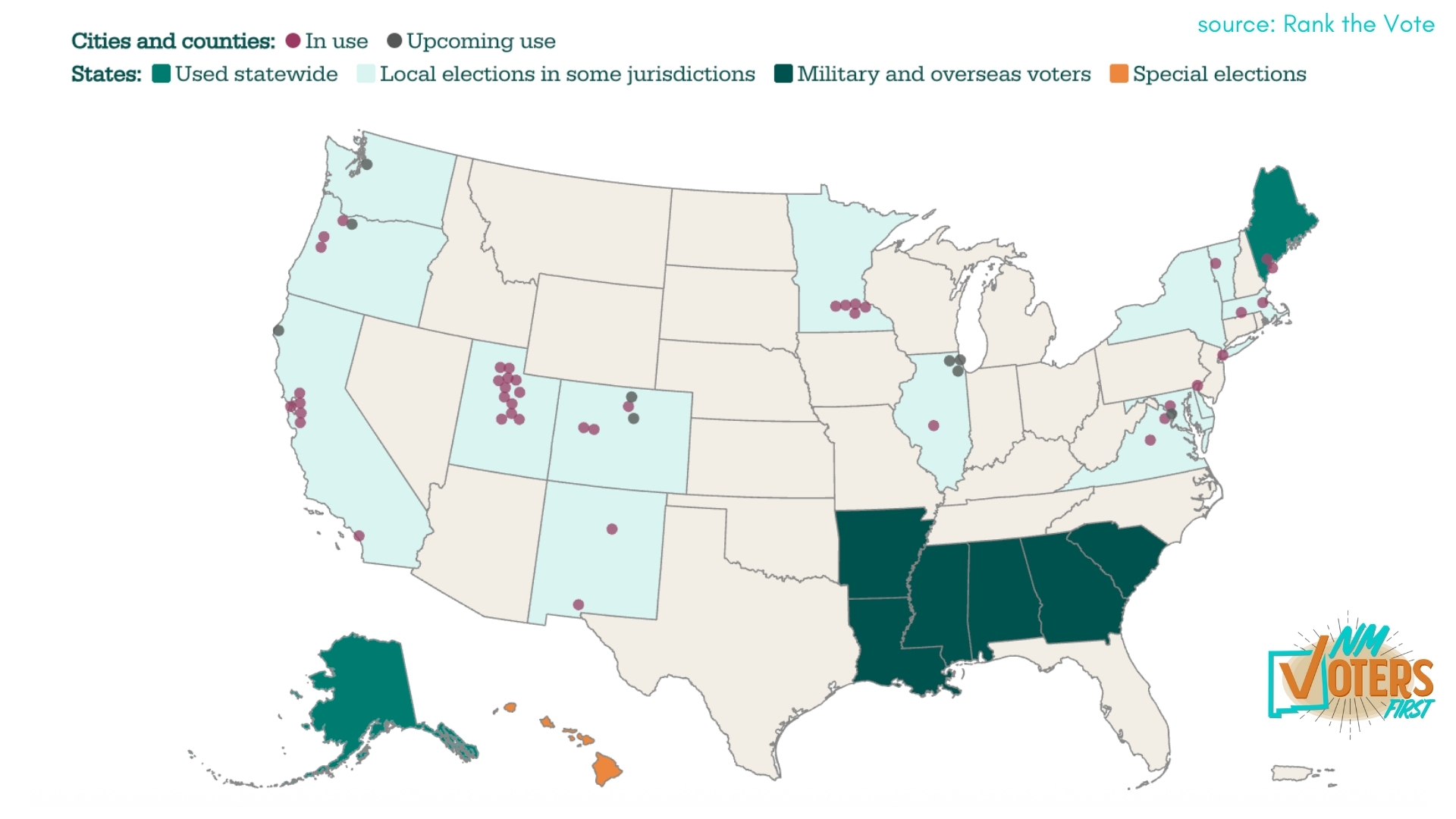
Cities that have RCV elections, including Santa Fe and Las Cruces, have seen a steady increase in voter turnout. When voters feel their vote will matter, they turn out in greater numbers. In Santa Fe and Las Cruces, NM, voters approve of RCV, they find it easy to use and effective in electing good candidates! Albuquerque's current voting technology would be able to apply RCV and there are no legal barriers to using it.
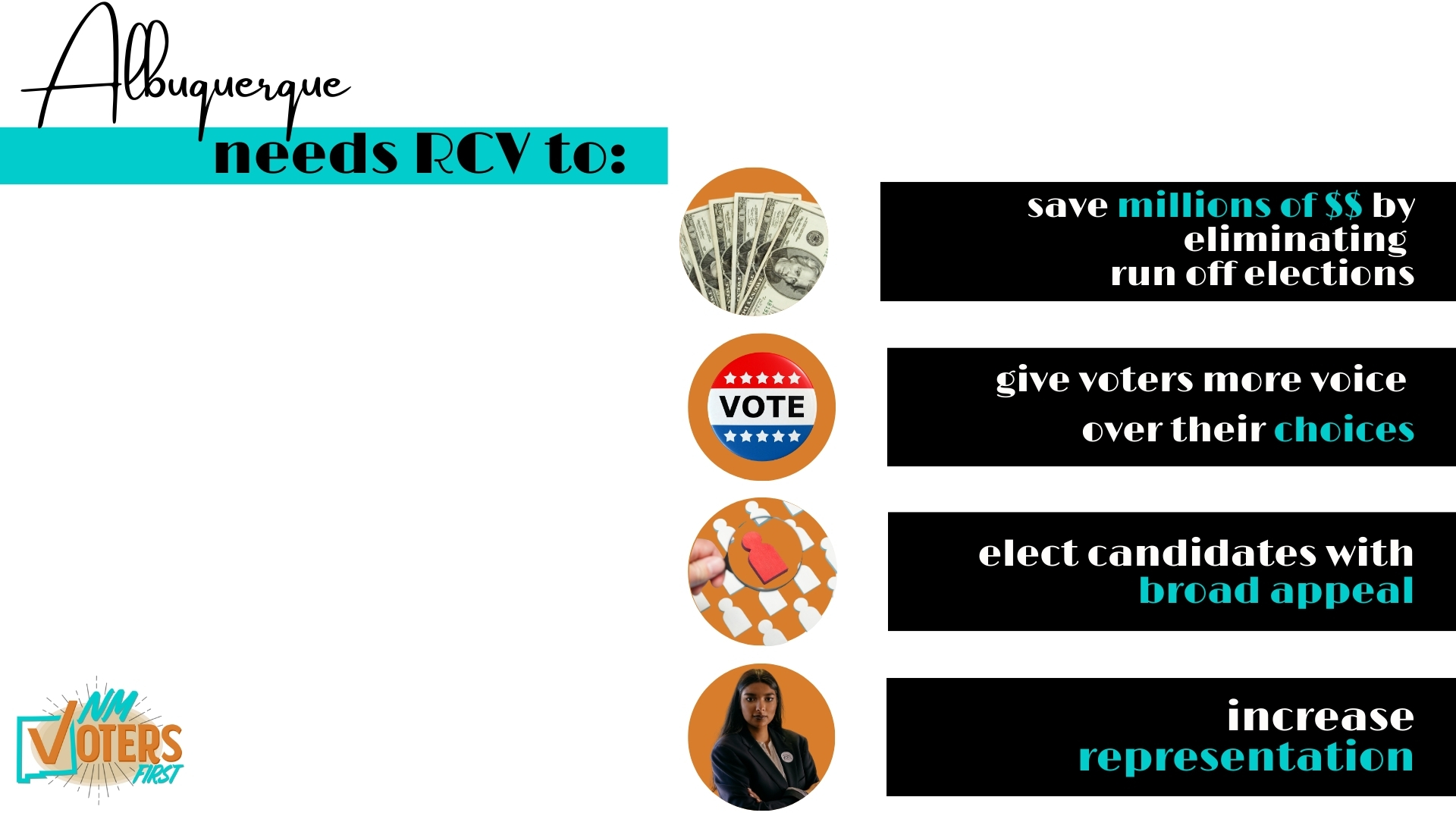
Here's why we advocate for Ranked Choice Voting
- Increases Voter Participation: When voters are able to fully express their preferences, voter turnout also tends to increase. Studies have shown that turnout in elections using RCV increased by ten percent, even after accounting for other factors.
- Saves Time and Money: RCV saves time and money for jurisdictions by eliminating the need for costly runoff elections. Runoff elections are not only extremely costly but also less representative. Runoff elections tend to have low and unbalanced turnout resulting in the selection of candidates who may not actually reflect voter preferences.
- Avoids the Spoiler Effect: With RCV, voters do not have to worry about strategically voting for candidates that they do not like in order to avoid “throwing away” or splitting their vote. If candidate B is the voter’s favorite choice, people can vote for B without fear that their vote will be “wasted.”
- Reduces Negative Campaign Tactics: RCV forces candidates to abandon negative campaign tactics because candidates not only need the first choice votes of their supporters, but also the second and third choice votes from voters who prefer other candidates. Studies have shown that jurisdictions with RCV have experienced friendlier campaigns and majority support in the cities using it.
- Equitable Representation: RCV elections allow a larger spectrum of voters to elect their candidates of choice. In RCV elections, minority communities and communities with a diversity of backgrounds can elect candidates of choice. This in turn can lead to a more diverse array of candidates.
Support adopting RCV in Albuquerque? Sign the petition from our friends at Common Cause New Mexico to support RCV!
Do you like this page?
